Why great CEOs bypass logic to persuade their teams.
CEOs of multi-billion-dollar empires are expected to talk about EBITDA, profit margins, and global expansion. Retired CEOs are expected to talk about leadership.
No one expects them to talk about love.
Yet in early 2024, the man who built one of the most recognizable empires on earth posted a surprising public letter.
Posting to LinkedIn on February 7, retired Starbucks CEO Howard Schultz challenged his former leadership team to protect something unmeasurable:
“Take the extra critical step to truly understand and honor the soul of the company and its brand.”
The conversation that almost killed Starbucks.
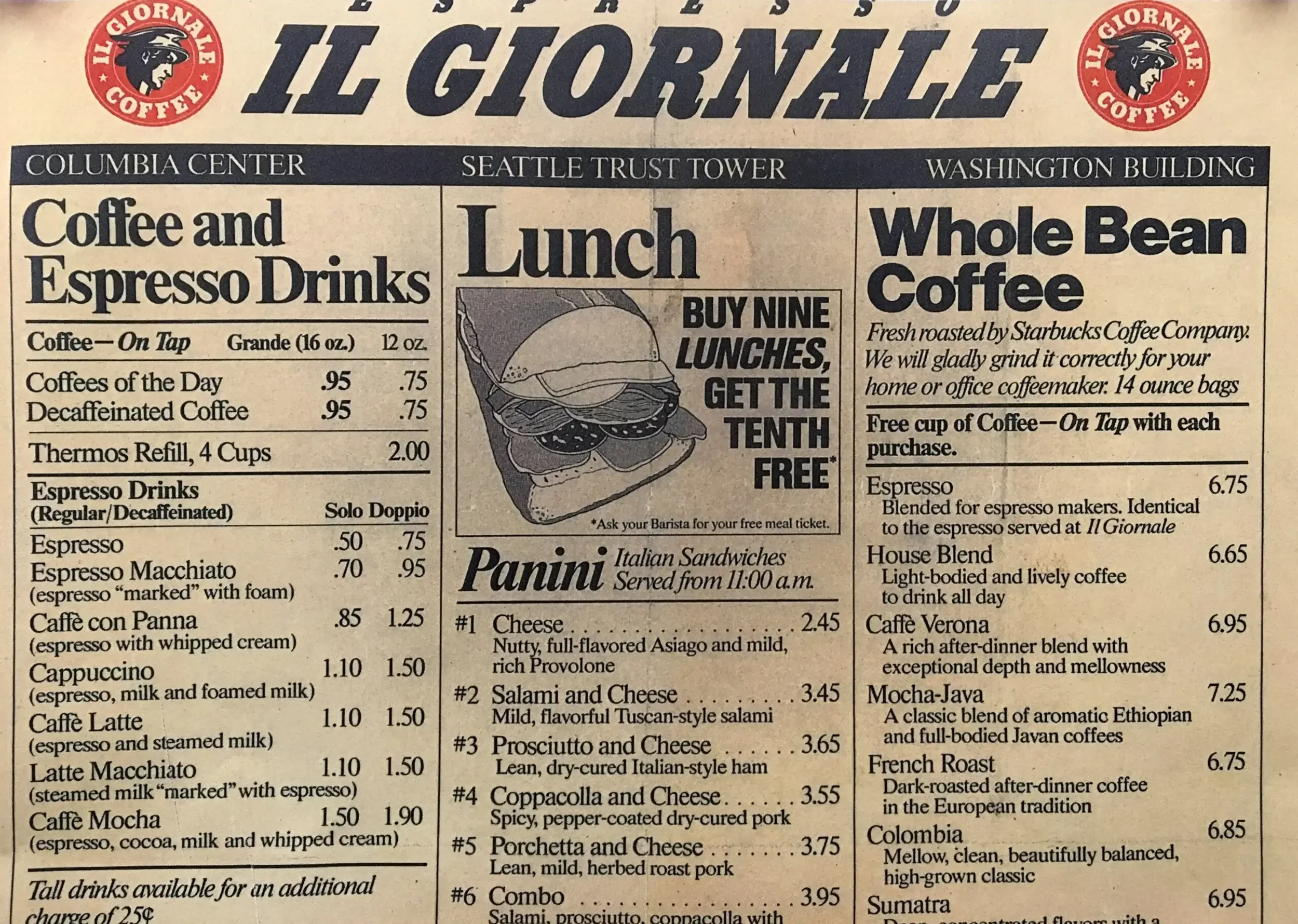
To understand the idea Howard is selling in his public letter, you have to understand what it cost him to build Starbucks. In 1985, Howard quit his job to open an Italian-style café called Il Giornale.
Before Il Giornale became the global empire we know as Starbucks, the entire vision was almost killed by a humiliating conversation with his father-in-law:
“I think you need to get a job. You don’t have a job or a salary. You have a hobby and my daughter is seven months pregnant and working.”
Howard almost quits. His wife tells him to keep going.
You already know what happens next.
So Howard continues. And across three separate runs as CEO, Howard scales his “hobby” into a 37,000-store global empire.
But scaling is dangerous. So the core idea that Howard wants to sell to his former leadership team is to understand and protect the soul of the brand. He wants more for Starbucks than financial success. He wants Starbucks to remain the cultural icon it has become.
“For the company to appropriately respond to the pressures of a very difficult operating environment, increased competition, and a world undone, “the center” must hold.”
The danger of spreadsheet logic.
In a world driven by numbers and spreadsheets, Howard speaks from his heart. The device Howard uses to sell his idea isn’t logic. Far from it. He anchors his entire letter in incredibly emotive language. For example…
“It’s in the hearts and minds of the thousands who wear the green apron, and the millions of customers who come into our stores each day. It can’t be bottled or packaged. It can only be honored and nurtured.”
Later in the letter, he takes it further using a word you never hear in boardrooms…
“It doesn’t emerge from the company’s strategy or tactical execution. It’s born out of love, of passion, and the responsibility of its leaders to simply do the right things.”
When Howard uses words like ‘love’ he’s tapping into hard science. Breakthroughs in the fields of neuroscience and decision-making by Antonio Damasio showed us that without the emotional center of our brain, we can’t make simple decisions.
Emotion helps us reason effectively.
Dr. Jill Bolte Taylor famously summarized this idea…
“Although many of us may think of ourselves as thinking creatures that feel, biologically we are feeling creatures that think.”
Howard intuitively gets this. Watch how he bypasses the logical brain and uses emotive and sensory detail to anchor his team…
“I suggest you go to Pike Place and take in fifty years of sharing our love of coffee and community with customers. The soul of the company lives within the walls of the store, the floorboards, the countertops, the hearts and minds of our partners, and the ever present aroma of our coffee that will grab you by your heartstrings.”
Speak to the feeling brain.
Great leaders aren’t afraid to use emotive language. They understand that hearts are moved by emotion.
“Starbucks and its place in society and culture plays a critical role in the lives of our people, our customers, and the communities we serve. Take the extra critical step to truly understand and honor the soul of the company and its brand. It’s what binds us all together.”
As you communicate with your leaders this week, remember that you are leading feeling creatures (yes, even the CFO). Pure logic doesn’t build empires. Emotion and love do.
If you want to read Howard’s full letter, you can find it here.
Note: Quotes have been edited to improve readability while preserving meaning and voice.